Mechanical Breakdown Insurance (MBI) in New Zealand covers the cost of repairing or replacing parts of a car that fail unexpectedly through mechanical or electrical breakdown, such as the engine, transmission, cooling system or engine management computer. It does not cover wear and tear, servicing, or accident damage — comprehensive car insurance covers the crash, MBI covers the failure. Quashed compares MBI quotes and cover from NZ providers online.
Updated July 2026
Compare & SaveOn MBI
Compare mechanical breakdown insurance quotes and cover from NZ providers online with Quashed — and check your car qualifies in seconds.
One line decides an MBI claim: did the part fail unexpectedly, or did it wear out? Everything else follows from that.
Covered — it failed
Engine and transmission
The most expensive components to replace, and the reason most people buy MBI. Failure of internal engine or gearbox parts during normal use.
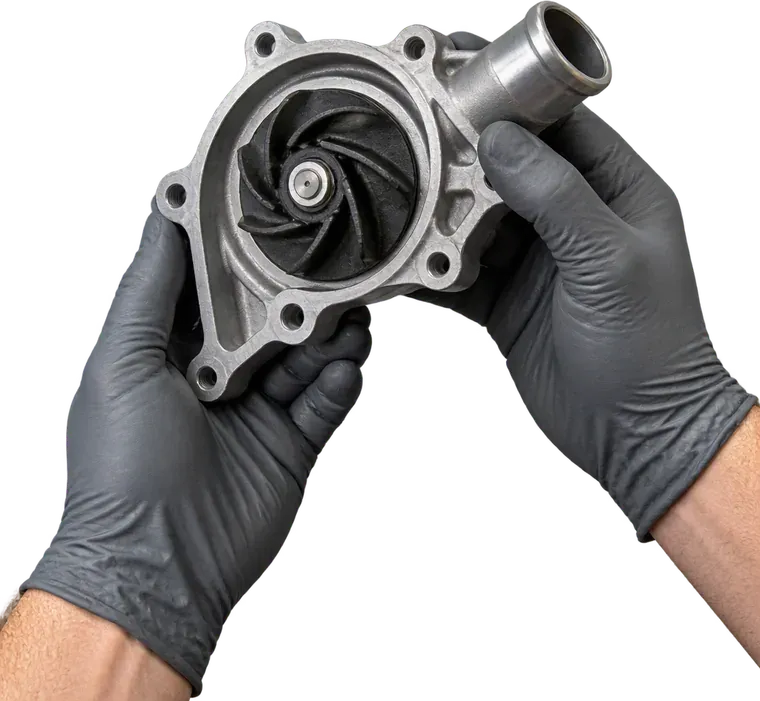
Cooling system and water pump
Named by Autosure as one of the most common claims. A failed water pump can take the engine with it if it is not caught.
Engine management computer
Modern cars run on electronics. An ECU failure is a four-figure repair on many models and is not something a service picks up in advance.
Suspension components
Another commonly claimed failure. Covered where the part fails unexpectedly, rather than wearing out over time.
Electrical failures
Starter motors, alternators and other electrical parts that stop working during ordinary use.
Often roadside assistance
Many MBI policies bundle roadside assistance, which a manufacturer’s warranty typically does not. Check the policy wording.
Not covered — it wore out
Normal wear and tear
This is the big one. MBI covers unexpected failure, not parts reaching the end of their life. Brake pads, clutches and tyres are consumables.
Pre-existing faults
A fault the car already had when the policy started is not covered, which is why eligibility is assessed up front.
Servicing and maintenance
Oil changes, filters, WOF work and scheduled servicing are your cost. Skipping them can also void a claim.
Accident damage
That is what comprehensive car insurance is for. MBI and car insurance cover opposite events — most people who hold MBI hold both.
Modified or special vehicles
Heavily modified cars, and vehicles used commercially for delivery or passenger service, are generally not eligible.
Limits per claim and per part
Policies cap what they pay, and the caps vary between providers. This is the single biggest difference to compare on.
A water pump is the line in one part.
Autosure names it among their most common claims. Seizes unexpectedly and it is covered; the same pump weeping past a worn seal you were told about at the last service is not. Left alone, either one can take the engine with it.
Exclusions and per-claim limits vary between providers, and this is a general guide rather than a policy summary. Always read the wording before you buy.
MBI vs comprehensive car insurance
They are not alternatives. They cover opposite events, and most people who hold MBI hold comprehensive car insurance as well.
What mechanical breakdown insurance covers compared with comprehensive car insurance.
Most cars do. Eligibility is checked before you buy, which is why a quote takes seconds rather than days.
The usual exceptions are cars with a pre-existing fault, heavily modified cars and special vehicles, and cars used commercially — for delivering goods, or carrying paying passengers. Age and odometer also matter: providers set upper limits, and a car past them cannot be covered at any price.
If your car has a fault now, MBI will not cover it. Cover is for failures that happen after the policy starts, so the time to arrange it is while the car is running well — typically as a manufacturer’s warranty is about to expire.
Most everyday cars qualify. Age, odometer and how the car is used are what decide it.
Yes — and arguably more than a petrol car, because the parts that fail are fewer but far dearer. An EV has no cambelt or gearbox to rebuild, but it does have a drive battery and a motor, and a single failure there can approach what the car is worth.
Cover for them is normally sold as its own product rather than as an add-on to a petrol policy, and hybrids and plug-in hybrids are usually treated separately again — they carry both a combustion engine and a drive battery, so both sets of parts need to be in the wording. If you drive one, check you are being quoted the right product, not a standard policy with the battery quietly excluded.
Typically covered
The electric drive unit
The motor, inverter and the electronics that drive the wheels — the parts that replace an engine and gearbox, and the most costly things on an EV after the battery itself.
The on-board charger
The hardware inside the car that converts AC to the battery’s DC. A failure here can leave a car that drives perfectly unable to charge at home.
Sudden drive-battery failure
A battery that fails suddenly and unexpectedly, rather than one that has simply aged. This is usually capped separately from the rest of the policy.
The systems shared with any car
Braking, steering, suspension, cooling and the electrical system are covered much as they are on a petrol car. An EV is still a car.
Typically not covered
A battery that has gradually lost range
Every drive battery holds less charge as it ages. That is expected wear, not a breakdown, and no MBI policy covers it — this is the single most common misunderstanding about EV cover.
Charging cables, plugs and wall chargers
The cable and any home wallbox sit outside the car, and outside the policy. Check whether your contents or house insurance picks them up instead.
Damage from charging the wrong way
Using an incompatible charger, or ignoring the manufacturer’s charging instructions, can void a battery claim. Some policies also exclude a battery run flat and left flat for weeks.
The 12-volt starter battery
EVs still carry an ordinary auxiliary battery, and like any car battery it is treated as a consumable rather than a covered component.
The one term to read twice is the battery limit. Drive-battery cover is usually capped by the age of the car at the time of the claim, and that cap sits apart from the policy’s ordinary claim limit — so an older EV can be covered for materially less than a newer one on the same policy. Ask what the cap is at your car’s age, not what it is for a new one.
You do not have to dig through a policy document to find it. Tell Market Scan your car is electric or hybrid and an EV Battery Cover row appears in the results alongside the other benefits, showing whether each quote includes it and up to what amount — so you can see which policies cover the battery, and for how much, next to what they cost.
Two other things worth checking before you buy: whether a manufacturer’s battery warranty is still running, since most new EVs carry a separate battery warranty that outlasts the main one and cover bought on top of it may be paying for the same thing twice; and whether the policy requires servicing at set intervals, because an EV that seems to need almost nothing still has a service schedule, and missing it can cost you a claim.
MBI is designed to take over when a manufacturer’s warranty expires. While the warranty is still running, the two overlap.
Some MBI policies cover more than the original warranty did, and many include roadside assistance, which a warranty typically does not. Others cover less. The only way to know is to read both documents — compare what each one pays for, the per-claim limits, and how long the cover runs.
What drives the price of MBI
The car’s age and odometer
Older, higher-kilometre cars are more likely to fail, so they cost more to cover — and eventually stop being eligible.
Make and model
Parts availability and typical repair cost drive the price. A European car with expensive parts costs more to insure than a common Japanese hatchback.
The excess you choose
Providers commonly offer $400, $500, $750, $1,000, $1,500. A higher excess lowers the premium but raises what you pay per repair.
The term of the policy
MBI is often sold as a multi-year term rather than an annual renewal, so compare the total cost, not just the headline figure.
Claim limits and what is included
A cheaper policy with a low per-claim cap can cost more in practice than a dearer one that actually covers an engine rebuild.
How you use the car
Private use is standard. Commercial use — deliveries, ride-share, passenger service — changes eligibility and price.
Top reasons to use Quashed for MBI
Real MBI quotes from NZ providers, side by side
Compare claim limits and what is covered, not just the premium
Check eligibility before you buy — a quote in seconds if your car qualifies
EV or hybrid? See which quotes include battery cover, and up to what amount
More than 100,000 consumers have used Quashed since April 2021
Backed by Icehouse Ventures, Turners Automotive Group and NZ Growth Capital Partners
See what MBI would cost you
Real quotes from NZ providers, with claim limits shown side by side. Free, and no phone calls.
It is not compulsory, and it is not right for every car. The question is what an unexpected repair would mean for you.
MBI tends to make sense when a repair bill would be hard to absorb, when the car is your only way to get to work, or when a manufacturer’s warranty is about to run out on a car you plan to keep. It makes less sense on a low-value car where the premium and excess together approach what the repair would cost, or where you could comfortably pay for a failure out of savings.
When is the best time to consider MBI?
At the point you buy the car, or as a manufacturer’s warranty is about to expire on one you plan to keep. Cover has to be arranged while the car is running well — a fault the car already has is never covered — so the moment it starts making a noise is the moment it is too late.
Buying privately, on Trade Me or from a friend, is the case worth thinking hardest about. A registered motor vehicle dealer has to meet the Consumer Guarantees Act, so if the car turns out to be faulty you have a claim against them. The CGA does not apply to private sales. Buy from another person and there is no dealer to go back to — the repair bill is simply yours, which is exactly the gap MBI is written to fill.
Quashed does not tell you whether to buy it. It shows what the cover costs and what each policy actually includes, so the decision is made on real numbers.
Choosing your MBI excess
The excess is what you pay towards each repair. NZ providers commonly offer $400, $500, $750, $1,000, $1,5002.
A higher excess lowers the premium, but MBI excesses apply per claim, so if the car has two failures in a year you pay it twice. Pick a figure you could cover at short notice without it becoming a problem.
Making an MBI claim
MBI claims work differently from car insurance claims: approval usually has to come before the repair, not after.
1
Stop driving it if you can
Continuing to drive a car that has failed can turn a covered repair into consequential damage the policy will not pay for.
2
Contact the insurer before the repair
MBI claims are almost always approved before work starts. A repair you have already paid for may not be reimbursed.
3
Use an approved repairer
Most policies require the repairer to be approved, or the diagnosis to be confirmed by the insurer first.
4
Have your service history ready
Insurers check the car was maintained to schedule. A missing service is one of the more common reasons an MBI claim is reduced.
Watch Mechanical Breakdown Insurance Videos
Short explainers from the Quashed Instagram on how mechanical breakdown cover works.
Quashed CTO Wenbo on buying MBI through Quashed, and what it covers that car insurance does not
Why you want to know about MBI before you need it — Autosure’s claims lead on what breakdowns actually cost
Autosure’s CEO on their mechanical breakdown and car insurance cover
Latest NZ insurance news
NZ newsrooms use Quashed's data to report on insurance trends.
What users are saying about Quashed — unfiltered feedback.
5 out of 5 stars★★★★★
Great site, easy to use with useful comparison of key terms across various insurers. Instant quotes without having to spend hours completing online forms and waiting for responses.
Iain Livingstone
5 out of 5 stars★★★★★
Uploaded policy’s got comparisons switch them all and saved around 1600 in premiums a year. Team even helped get a provider get in touch when we had a website issue
Adam Dempsey
5 out of 5 stars★★★★★
Quashed is the only insurance comparison website I've found that gives you quotes in one place from multiple insurers for your given policy options.
Mike Rans
Ready to compare?
Join 100,000+ Kiwis using Quashed to compare their cover. Free, online, no phone calls.
Mechanical Breakdown Insurance, or MBI, covers the cost of repairing or replacing specific parts of a car when they fail unexpectedly during normal use. Breakdowns can be expensive, and MBI is a way to protect yourself from that cost and get back on the road sooner.
What does MBI cover?
Common claims shared by Autosure, an MBI provider, include failure of water pumps, cooling systems, engine management computers and suspension. Claims range from hundreds of dollars to tens of thousands. There are limits on what is covered and how much is paid, and those limits vary between providers.
How is MBI different from comprehensive car insurance?
They cover opposite events. Comprehensive car insurance covers accident damage, theft and third-party liability, but not a mechanical or electrical failure. MBI covers the failure, but not a crash. Most people who hold MBI also hold comprehensive car insurance.
Does my car qualify for MBI cover?
Most cars do. The usual exceptions are cars with pre-existing faults, heavily modified or special vehicles, and cars used commercially such as for delivery or passenger service. Running a Market Scan checks eligibility and returns a quote in seconds if your car qualifies.
My car has a manufacturer’s warranty. Do I still need MBI?
MBI is designed to take over once a manufacturer’s warranty expires. Some MBI policies cover more than the warranty did, and many include benefits such as roadside assistance that a warranty does not, so it is worth comparing the two documents rather than assuming.
Why should I consider MBI?
It protects you financially if the car fails, and certain parts are very expensive to repair or replace. It also gets you back on the road faster, which matters if it is your only car and you cannot afford to fix it up front.
Can I get MBI for an electric car or a hybrid?
Yes. Cover for EVs, hybrids and plug-in hybrids is normally sold as its own product rather than as an add-on, because the parts at risk are different — the drive battery, motor and on-board charger rather than an engine and gearbox. Check you are quoted the right product for the car you drive.
Does MBI cover an EV battery losing range?
No. A drive battery gradually holding less charge is expected wear, not a sudden breakdown, so no MBI policy covers it. A battery that fails suddenly and unexpectedly can be covered, though the amount is usually capped by the age of the car at the time of the claim.
Does MBI cover wear and tear?
No. MBI covers unexpected failure, not parts reaching the end of their normal life. Consumables such as brake pads, clutches and tyres are excluded, and skipping scheduled servicing can also affect a claim.
Reviewed July 2026 by James, Quashed. This page is a general guide to how mechanical breakdown insurance works in New Zealand. It is not financial advice and not a policy summary.
Sources
MBI is not currently a line in the Quashed Insurance Index, so this page quotes no average premium or saving. Cover descriptions and commonly claimed components are from Quashed's MBI policy information and from Autosure, an MBI provider.
Excess options are those offered through Quashed Market Scan for mechanical breakdown insurance. Individual providers may offer a narrower range.