Is It Cheaper to Pay Insurance Monthly or Annually in NZ 2026?


Yes, in almost every case it is cheaper to pay your insurance annually rather than monthly or fortnightly in New Zealand. Paying for the full year upfront usually avoids the small loading insurers add to instalment payments, though how much you save varies a lot from one insurer to the next. And paying annually does not lock your money away: if you cancel partway through the year, most insurers refund the unused portion.
At Quashed, we compare insurance for thousands of Kiwis, so we see exactly how the way you pay affects what you pay. In this guide we break down whether monthly or annual payments are cheaper in New Zealand, show real pricing from a Quashed Market Scan, reveal which insurers charge the most for paying monthly, and explain why your payment method is only one part of a much bigger savings opportunity.
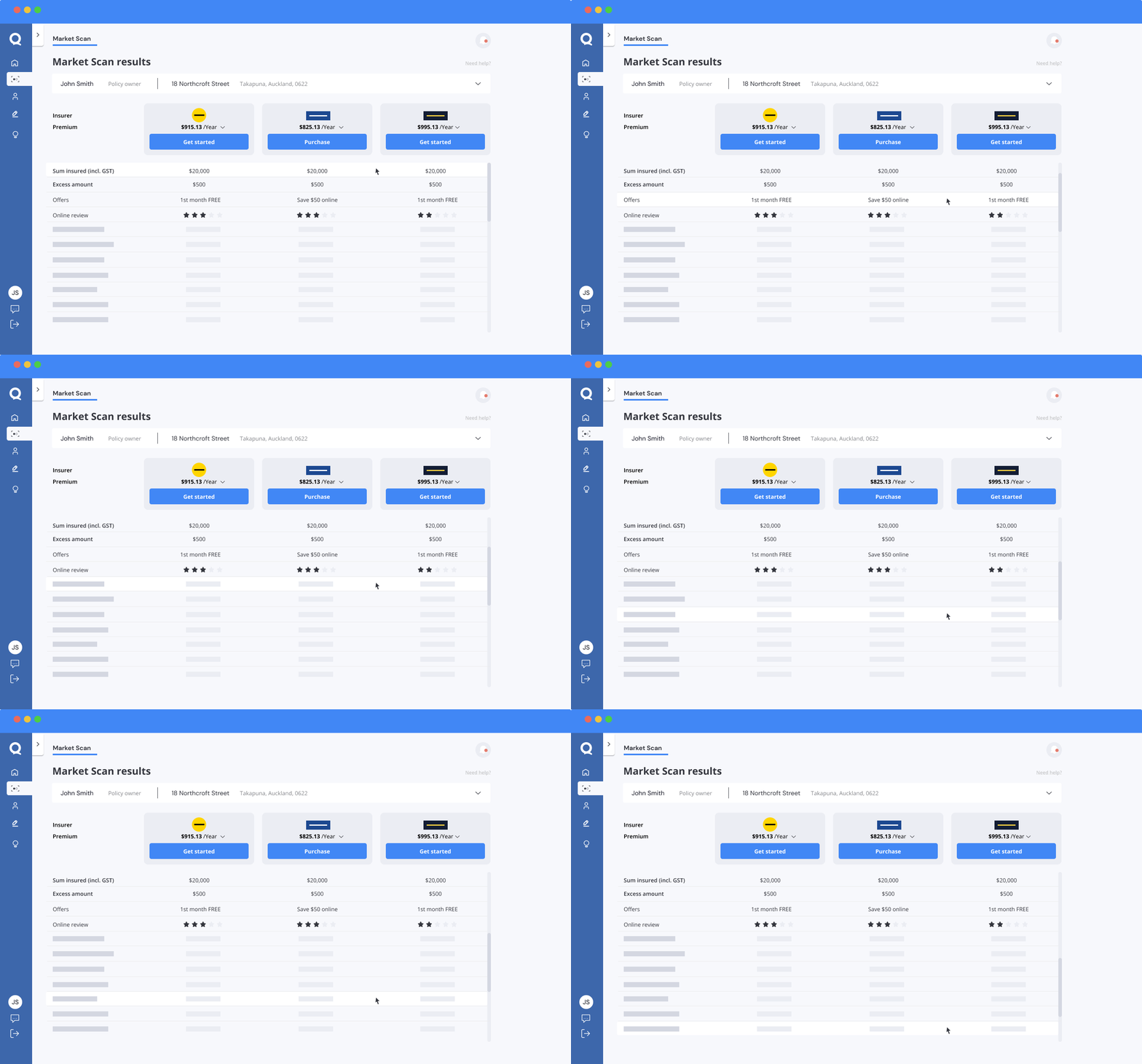
Want to see the difference for yourself? Run a free Quashed Market Scan and toggle between monthly and yearly pricing to watch the price update live across insurers before you choose.

How much cheaper is it to pay insurance annually?
It depends entirely on your insurer. In a recent Quashed Market Scan, paying annually instead of monthly saved anywhere from about a dollar to more than $200 a year for the exact same cover.
We ran a Market Scan for a single driver profile to keep the comparison fair: a Toyota Corolla GX 1.8 in Massey, Auckland, owned by a 35-year-old with a full NZ licence, five or more years of driving experience, and no accident history. The quotes are for comprehensive cover with an $11,495 sum insured and a $500 excess. Here is what the same six insurers charged when paying monthly versus annually.
Insurer | Per month | Cost over a year if paid monthly | Annual price | You save by paying annually |
Cove | $83.04 | $996.48 | $897.95 | $99 (about 10%) |
Assurant | $90.91 | $1,090.92 | $1,089.86 | $1 (about the same) |
Tower | $97.27 | $1,167.24 | $1,053.03 | $114 (about 10%) |
Provident | $104.87 | $1,153.57 | $1,048.92 | $105 (about 10%) |
MAS | $110.00 | $1,210.00 | $1,130.00 | $80 (about 7%) |
AMP | $140.29 | $1,683.48 | $1,531.44 | $152 (about 9%) |
Prices captured from a Quashed Market Scan for the profile described above. The “cost over a year if paid monthly” column is the monthly price multiplied by 12. Your own results will differ by profile, insurer, and over time.
The pattern is clear: every provider in this scan was at least slightly cheaper to pay annually, but the size of the saving ranged enormously. With AMP, paying upfront saved about $150 a year. With Assurant, the difference was barely a dollar. Cove came out cheapest either way for this profile, at $83.04 a month or $897.95 a year. When we ran the scan, Cove was also offering new customers one month free, worth up to $100, which is not included in the prices above.
See how your own premiums compare across insurers with a free Quashed Market Scan. You can toggle between monthly and yearly pricing to see your exact saving before you commit.

Which insurers charge the most for paying monthly?
In our Market Scan, Provident and MAS charged the most extra for paying monthly, while Assurant charged almost exactly the same whether you paid monthly or annually.
Ranked by how much more it cost to pay monthly across a full year, the six insurers lined up like this:
Provident: about $105 a year more (around 10%)
MAS: about $80 a year more (around 7%)
AMP: about $152 a year more (around 9%)
Tower: about $114 a year more (around 10%)
Cove: about $99 a year more (around 10%)
Assurant: about $1 a year more (effectively no difference)
The takeaway is that the monthly loading is not a flat industry rate. With some insurers, paying monthly is almost free of any penalty; with others, it quietly adds the equivalent of a couple of weeks of cover every year. That is why it pays to check the yearly price before you default to monthly instalments. These figures come from one profile at one point in time, so treat them as a guide to the scale of the difference rather than a fixed rule for every driver.
The average Kiwi household can save
$1,509 a year by shopping their insurance!
Find out how your renewal prices stack up against other options out there!
Why do insurers charge more if you pay monthly?
Insurers generally charge more for monthly or fortnightly payments because spreading the cost across the year carries an administrative and cash-flow cost, which is passed on as an instalment loading.
When you pay annually, the insurer receives your full premium upfront. When you pay by instalments, they collect smaller amounts across the year while still carrying the full cost of your cover. To account for this, many insurers build a loading into instalment pricing, so the total you pay over twelve months is higher than the single annual figure. How big that loading is comes down to each insurer's own pricing approach, which is exactly why the gap varied so much in our scan. It is less a penalty and more the price of paying over time.
Shop smarter with Quashed
Insurance just got way easier with Quashed. Compare, shop and track all your insurance in one place.
When is it better to pay insurance monthly?
Paying monthly is often the better choice when finding a full year of premium upfront would strain your budget, even though it usually costs a little more overall.
A large annual premium can be hard to find in one go, especially for house insurance, where the national average now sits at $2,949 a year. Spreading that across smaller fortnightly or monthly payments can make cover far more manageable, and it helps ensure your policy stays active rather than lapsing because a single big bill was missed.
Even the biggest gap in our scan, around 10% more a year, may be a fair trade for steadier cash flow if paying annually is not realistic for you. The key is to make an informed choice: find out what the annual-payment saving is worth with your insurer, then decide whether the convenience of paying monthly is worth giving it up.

What is the best way to save on insurance in NZ?
The biggest savings in New Zealand usually come not from how you pay, but from shopping around, because staying loyal to one insurer can quietly cost you far more than any instalment loading.
Our latest data shows that Kiwis who do not compare their insurance are paying an average loyalty tax of $1,560 a year across their car, house, and contents policies combined, with the average household now spending $5,020 a year on all three. Set that against the up-to-$210 monthly loading we found, and it is clear which lever matters most: choosing the right insurer usually saves far more than choosing the right payment frequency.
The savings on offer when you compare are significant. In Q1 2026, people who shopped their insurance with the Quashed Market Scan found a cheaper policy:
81% of the time for comprehensive car insurance, saving an average of $377 a year
67% of the time for house insurance, saving an average of $908 a year
76% of the time for contents insurance, saving an average of $275 a year
In other words, paying annually might save you up to around 17% with some insurers, but switching to a better-value insurer could save you considerably more again. The smartest approach is to do both: find your best-value insurer, then pay annually if you can.
See how your premiums stack up with a free Quashed Market Scan. It takes just a few minutes and compares your profile against other NZ insurers.
Market Scan quotes are direct from insurers
So you won’t pay more with Quashed
How can you lower your insurance premium whether you pay monthly or annually?
You can lower your premium regardless of how you pay by choosing annual payments where you can afford to, adjusting your excess, keeping your sum insured accurate, and comparing insurers regularly.
Pay annually if your budget allows. If you can cover the full year upfront, you will usually avoid the instalment loading and pay less overall, sometimes by well over $100 a year.
Increase your excess. Choosing a higher excess that you can comfortably afford at claim time generally lowers your premium.
Keep your sum insured accurate. Over-insuring means paying for cover you do not need, so review it at renewal to reflect current value.
Compare every year. Insurers often reserve their sharpest pricing for new customers, so comparing at each renewal helps you avoid the loyalty tax.
For a deeper look at balancing price and cover, see our guides below.

Related Reading
Average Car, House, and Contents Insurance Cost NZ 2026: The latest Quashed Index data on what Kiwis pay across car, house, and contents cover.
Cheap Car Insurance NZ 2026: Proven Ways to Lower Your Premium: Practical 2026 tips to cut your car insurance costs, including paying annually.
Ultimate NZ Guide to Car Insurance (2026): Compare & Find the Best and Cheapest Cover: Our complete guide to comparing car insurers and finding better cover this year.
Ultimate NZ Guide to House Insurance (2026): Compare & Find the Best and Cheapest Cover: How to set your sum insured and find cheaper house cover this year.
Ultimate NZ Guide to Contents Insurance (2026): Compare & Find the Best and Cheapest Cover: Work out the right contents sum insured and compare policies side by side.
Stop Overpaying: The 2026 Guide to Using Quashed for Cheaper NZ Insurance: How to use Quashed to spot price gaps and lower your premiums across every policy.
Frequently Asked Questions
Is it cheaper to pay car insurance monthly or annually in NZ?
It is usually cheaper to pay annually. In a recent Quashed Market Scan, every insurer was at least slightly cheaper to pay annually, with savings ranging from about a dollar a year to more than $200 a year for the same cover. Paying the full year upfront typically reduces your total cost.
Do you pay interest on monthly insurance payments in NZ?
Not always interest in the traditional sense, but many insurers build a loading into instalment pricing. That means paying monthly or fortnightly usually costs more in total than paying annually. Check your policy documents or compare the monthly and yearly prices to see the exact difference.
Is paying fortnightly cheaper than paying monthly?
Generally there is little difference between fortnightly and monthly. Both are instalment options that usually cost more in total than paying annually. Paying the full year upfront is typically the cheapest option overall.
Can I switch from monthly to annual insurance payments at any time?
In most cases, yes, and often whenever you like. Many New Zealand insurers let you change how you pay by getting in touch, though the process varies: some apply the change straight away, others from your next renewal, and a few set up a new policy and refund the unused portion of the old one. To switch to annual payments and capture the saving, contact your insurer and ask how and when they can make the change.
Does paying annually change my level of cover?
No. Your cover, excess, and sum insured are set by your policy, not by how often you pay. Choosing annual or monthly payments only affects how and when you pay, and usually the total cost, not what you are actually covered for.
Is it worth paying annually if I might cancel my policy?
It can be, but check the refund terms first. Many insurers refund the unused portion if you cancel an annual policy, though some may apply conditions. If you expect your circumstances to change soon, ask your insurer how cancellations and refunds are handled before paying upfront.
However you choose to pay, the surest way to keep your insurance affordable is to compare regularly. Run a free Quashed Market Scan today, toggle between monthly and yearly pricing, and see exactly where your premiums stand.


