Guide to Insurance Brokers in NZ (2026)


Insurance can be complex, and a little expert guidance can make a big decision much easier. That is where an insurance broker comes in.
An insurance broker, also called an insurance adviser or financial adviser, acts as a go-between for you and insurance companies. They provide advice, help you choose the right cover, can negotiate on your behalf, and often support you through the claims process.
Here is the honest answer up front: for most Kiwis, a broker is not needed. Our free Market Scan tool compares insurers from across the market in about 90 seconds, and for the vast majority of everyday cover that is all it takes to find a better deal. A broker can add value in more specific situations, and this guide explains how brokers work in New Zealand in 2026, what they cost, and when one might actually be worth it.


What does an insurance broker do?
An insurance broker researches, recommends, and arranges insurance policies on your behalf, then continues to support you through renewals and claims.
Rather than approaching a single insurer directly, you give your broker a clear picture of what you want to protect and your budget. They then compare options from the insurers they work with, explain the differences in plain language, and help you put the right cover in place. Many brokers also handle policy changes and act as your advocate when you need to make a claim.
For most everyday cover, from car and home to contents, a broker is not necessary. The free Market Scan compares policies and prices from across the market in one place, which is exactly what a broker would do for you, only faster. Our guide to car insurance, guide to house insurance, and guide to contents insurance break down each type of cover so you know what to look for. Brokers can still be helpful for more involved areas such as life, health, and business insurance, which we cover below.

What are the benefits of using an insurance broker?
The main benefit of using an insurance broker is access to personalised advice and ongoing support, often at no direct cost to you.
No direct cost in most cases: Insurance brokers are usually paid a commission by the insurer. Because that commission is built into the policy premium whether you buy through a broker or go direct, using a broker generally does not cost you any extra. Some brokers do charge a fee as well, so always ask how a broker is paid before you engage them.
They can help with claims: Your broker keeps working for you after the policy is purchased and can liaise with the insurer on your behalf if you need to make a claim or change your cover. Having someone familiar with the process in your corner can take a lot of stress off your plate.
They save you time and energy: Instead of spending hours researching policies yourself, your broker does the legwork and presents you with suitable options.
They can negotiate for you: Brokers deal with insurers regularly and can advocate on your behalf to help secure appropriate cover at a competitive price.
They provide tailored advice: A broker can recommend cover matched to your specific circumstances, rather than a one-size-fits-all policy.
They review your cover over time: As your situation changes, a broker can adjust your policies and sums insured so you are neither under-insured nor paying for cover you no longer need.
It is worth knowing that for most everyday cover, you do not need a broker for these benefits. A free Market Scan delivers the same price comparison and choice of policies in about 90 seconds, and most Kiwis will not miss having a broker on top of that.
The average Kiwi household can save
$1,509 a year by shopping their insurance!
Find out how your renewal prices stack up against other options out there!
What are the downsides of using an insurance broker?
The main downside of using an insurance broker is that no broker covers the entire market, so you only see policies from the insurers they work with.
A broker can only arrange cover from the insurers they have a relationship with, which means some providers and policies will not be on the table. Always ask a broker which insurers they work with before you sign up, and factor that into your decision.
This is the practical reason most Kiwis do not need a broker at all. The free Quashed Market Scan compares quotes from more than 10 insurers in one place, giving you a broader view of the market than any single broker can offer, for free. Our data on the average cost of car, house, and contents insurance in NZ is also a handy benchmark for what you should expect to pay.
Shop smarter with Quashed
Insurance just got way easier with Quashed. Compare, shop and track all your insurance in one place.
How much does an insurance broker cost in NZ?
Using an insurance broker in New Zealand usually does not cost you anything extra, because brokers are most often paid a commission by the insurer, and that commission is built into the policy premium whether you use a broker or buy direct.
Some brokers charge a fee that is roughly equivalent to the commission they would otherwise receive, while others add a small administration fee on top of their commission depending on the type of insurance. By law, an adviser must tell you how they are paid, so never hesitate to ask if it is not clear to you.
How are insurance brokers paid?
Brokers in New Zealand are typically paid through commission, which generally takes one of three forms:
Upfront commission: paid by the insurer when you first take out a policy.
Trail commission: a smaller, ongoing payment, often made yearly, for managing your policy and any changes to it over time.
Bonuses: additional payments for meeting targets, such as the number of policies sold or retained.
Some insurers can ask a broker to repay part of their commission if a policy is cancelled soon after it starts, and a broker may pass that cost on to you, so it is worth asking how cancellations are handled before you commit. Either way, the insurance premium itself is usually the bigger cost. Our report on the average cost of car, house, and contents insurance shows how much premiums have climbed in recent years, and for most Kiwis the most effective way to keep that cost down is simply comparing insurers with a tool like Market Scan, no broker required.

What qualifications do insurance brokers need in New Zealand?
In New Zealand, anyone giving regulated insurance advice must meet the licensing, competency, and conduct standards set under the Financial Markets Conduct Act, overseen by the Financial Markets Authority (FMA).
Insurance brokers are a type of financial adviser, and the advice they give to everyday customers is regulated. A new financial advice regime took effect on 15 March 2021, and since 17 March 2023 every adviser must either hold, or operate under, a full Financial Advice Provider (FAP) licence issued by the FMA. In practice, larger broking firms usually hold the licence, with individual advisers giving advice under it.
Advisers must also meet the competency standards in the Code of Professional Conduct for Financial Advice Services. The New Zealand Certificate in Financial Services (Level 5) is the recognised minimum standard of competence, knowledge, and skill. There is no degree requirement, although many advisers come from related backgrounds such as accounting or business. The Code has been refined since 2021, with updated conduct and competency standards taking effect in late 2025.
Under this regime, advisers must put customers first, manage conflicts of interest, present information clearly, and meet disclosure obligations. In practice, that means you can be confident a broker's advice is intended to serve your interests. If anything is unclear, ask, as advisers are obliged to answer your questions.
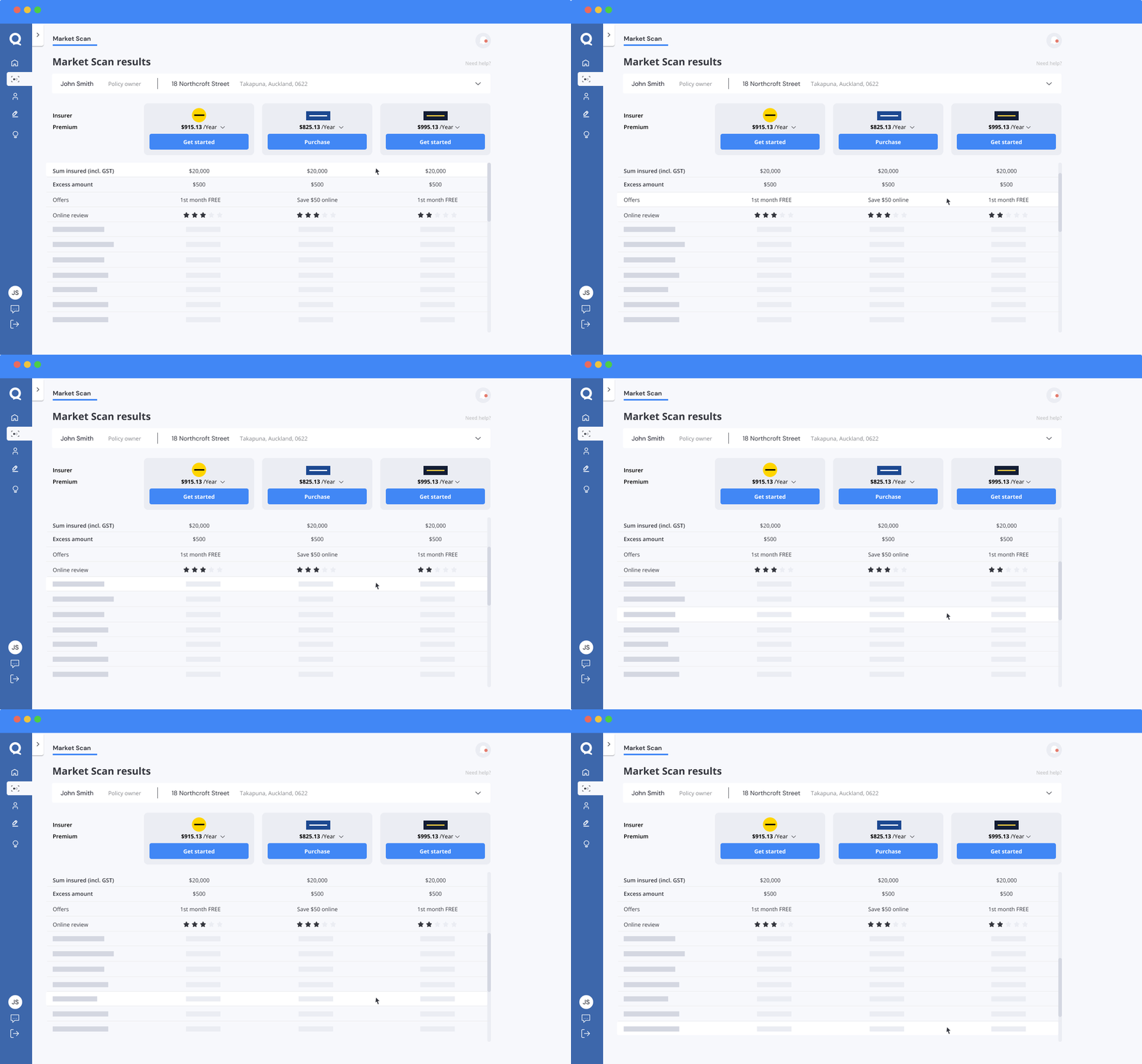
Market Scan quotes are direct from insurers
So you won’t pay more with Quashed
What should I expect from a good insurance broker?
A good insurance broker should take the time to understand your situation, explain your options in plain language, and recommend cover that genuinely fits your needs and budget.
Expect your broker to ask about what you want to protect and to discuss details such as your budget, age, health, and any previous policies. The more honest you are, for example about pre-existing health conditions, the better the advice they can give you.
When it comes to choosing a provider, ask which insurers your broker has experience with and how claims with those insurers have gone in the past. It also helps to know what good cover looks like yourself. Our guide to car insurance and guide to house insurance break down the policy benefits worth comparing, from rental car cover to how a sum insured is set, so you can ask sharper questions.
If a broker recommends switching policies, discuss every point of difference, especially whether any pre-existing conditions might no longer be covered after a switch, as that could leave you exposed. The advice should be clear and easy to understand, and if you cannot resolve a concern with a broker, you are not obliged to keep using their services.


What can I do if something goes wrong with my insurance broker?
If you are unhappy with your insurance broker, start by raising the issue with them directly, and if it is not resolved, escalate it to their dispute resolution scheme.
Every financial adviser in New Zealand must belong to one of four approved dispute resolution schemes:
The Banking Ombudsman Scheme
The Insurance & Financial Services Ombudsman (IFSO)
The Financial Dispute Resolution Service (FDRS)
Financial Services Complaints Limited (FSCL)
These schemes are free for consumers to use. The process is similar to arbitration: you will not need a lawyer or have to pay court costs, and both parties agree to abide by the outcome. Your broker must tell you which scheme they belong to as part of their disclosure to you.

How do I find a good insurance broker in NZ?
To find a good insurance broker in New Zealand, look for a properly licensed adviser whose communication style suits you, and check which insurers they work with before committing.
There are many broking services across the country, from large nationwide firms to small independent advisory businesses. A quick online search will return plenty of options, and who you choose will depend on the kind of service you want and who you feel comfortable with. You can confirm that an adviser or firm is properly licensed by searching the public Financial Service Providers Register.
Whoever you choose, it is always worth seeing the wider market for yourself. The free Quashed Market Scan lets you compare car, house, and contents insurance from across the market in about 90 seconds, and our car insurance calculator gives you an instant price estimate for your vehicle. Most Kiwis find Market Scan is all they need, while others use it to benchmark a broker's recommendation.

Do I need an insurance broker, or can I compare insurance myself?
For most Kiwis, no. A free Market Scan is enough to compare the market, find a better deal, and switch your cover, all without needing a broker. A broker is most useful in specific situations, such as life, health, or business insurance, where personalised advice genuinely matters.
Shopping around is one of the most effective ways to keep your premiums in check. Kiwis who do not compare their cover pay an average loyalty tax of $1,560 a year across their car, house, and contents policies combined, simply for staying with the same insurer. Whether you use a broker or not, checking the wider market protects you from quietly overpaying year after year.
The free Quashed Market Scan makes that easy. It compares real-time quotes from more than 10 insurers in about 90 seconds. In Q1 2026, Kiwis who shopped their cover with Market Scan found a cheaper policy 81% of the time on car insurance, 67% of the time on house insurance, and 76% of the time on contents insurance. Our car insurance calculator can also give you an instant price estimate for your vehicle in seconds.
To get the most out of a comparison, it helps to understand each type of cover. Our guide to car insurance, guide to house insurance, and guide to contents insurance explain how premiums are set and what to look for, while our average cost of car, house, and contents insurance report shows what other Kiwis are paying right now.
In short, for the vast majority of Kiwis, Market Scan does the same legwork a broker would for everyday cover, while leaving the comparison and the final choice in your hands. Quashed is a comparison platform rather than an advice service, and the quotes you see are pulled in real time directly from the insurers, at the same price you would pay going direct. We set out the full details of every quote side by side, from price to policy benefits, so you can weigh your options clearly and decide for yourself.
The bottom line: for most Kiwis, a Market Scan is sufficient and a broker is not needed. Comparing the market is what matters, and Market Scan is the fastest way to do it.

Related reading
Want to dig a little deeper before you decide? These Quashed guides cover what insurance costs in New Zealand and how to find the best cover for your car, home, and contents.
Average Car, House, and Contents Insurance Cost NZ 2026: The latest Quashed Index data on what Kiwis are paying for car, house, and contents insurance, including regional breakdowns and savings figures.
Ultimate NZ Guide to Car Insurance (2026): Compare & Find the Best and Cheapest Cover: How car insurance premiums are calculated and practical ways to find cheaper, better cover.
Ultimate NZ Guide to House Insurance (2026): Compare & Find the Best and Cheapest Cover: How to set your sum insured correctly and proven ways to lower your house insurance premium.
Ultimate NZ Guide to Contents Insurance (2026): Compare & Find the Best and Cheapest Cover: How to value your belongings and choose the right contents cover for your situation.
Car Insurance Calculator: Enter your number plate for an instant estimate of the lowest and highest car insurance premiums for a similar vehicle in NZ.
Frequently asked questions about insurance brokers in NZ
Here are clear answers to the questions Kiwis most often ask about using an insurance broker.
Is an insurance broker free in New Zealand?
In most cases, using a broker does not cost you anything extra. Brokers are usually paid a commission by the insurer, and that commission is built into the premium whether you use a broker or buy direct. Some brokers also charge a fee, so always ask how a broker is paid before you engage them.
What is the difference between an insurance broker and an insurance adviser?
There is no real difference, and the terms are used interchangeably in New Zealand. Both describe a regulated financial adviser who helps you choose and arrange insurance. Since the financial advice regime changed on 15 March 2021, the formal term for everyone giving regulated advice is “financial adviser”, whether or not they also call themselves a broker.
Do insurance brokers cover every insurer in NZ?
No. A broker can only arrange cover from the insurers they have a relationship with, so no single broker represents the entire market. Always ask which insurers a broker works with, and if you want a wider view, a tool like the Quashed Market Scan compares more than 10 insurers at once.
Are insurance brokers regulated in New Zealand?
Yes. Insurance brokers are regulated financial advisers overseen by the Financial Markets Authority. They must hold or operate under a Financial Advice Provider (FAP) licence and meet the competency and conduct standards set out in the Code of Professional Conduct for Financial Advice Services.
Can I compare insurance without a broker?
Yes, and most Kiwis are better off doing exactly that. The free Quashed Market Scan compares real-time quotes from more than 10 insurers in about 90 seconds, so you can see the market and find a better deal yourself, no broker needed. Our guide to car insurance and other cover guides explain what to look for if you would like more context. A broker is mainly useful for more involved areas like life, health, or business insurance.
Should I use an insurance broker or a comparison website?
For most Kiwis, a comparison tool is the better starting point and often the only step needed. The Quashed Market Scan gives you a fast, clear view of prices and policies from across the market for free, and most people will find that sufficient. A broker offers personalised advice and ongoing support, which can be worth it for life, health, or business insurance, but for everyday car, home, and contents cover most people will not need one.


